
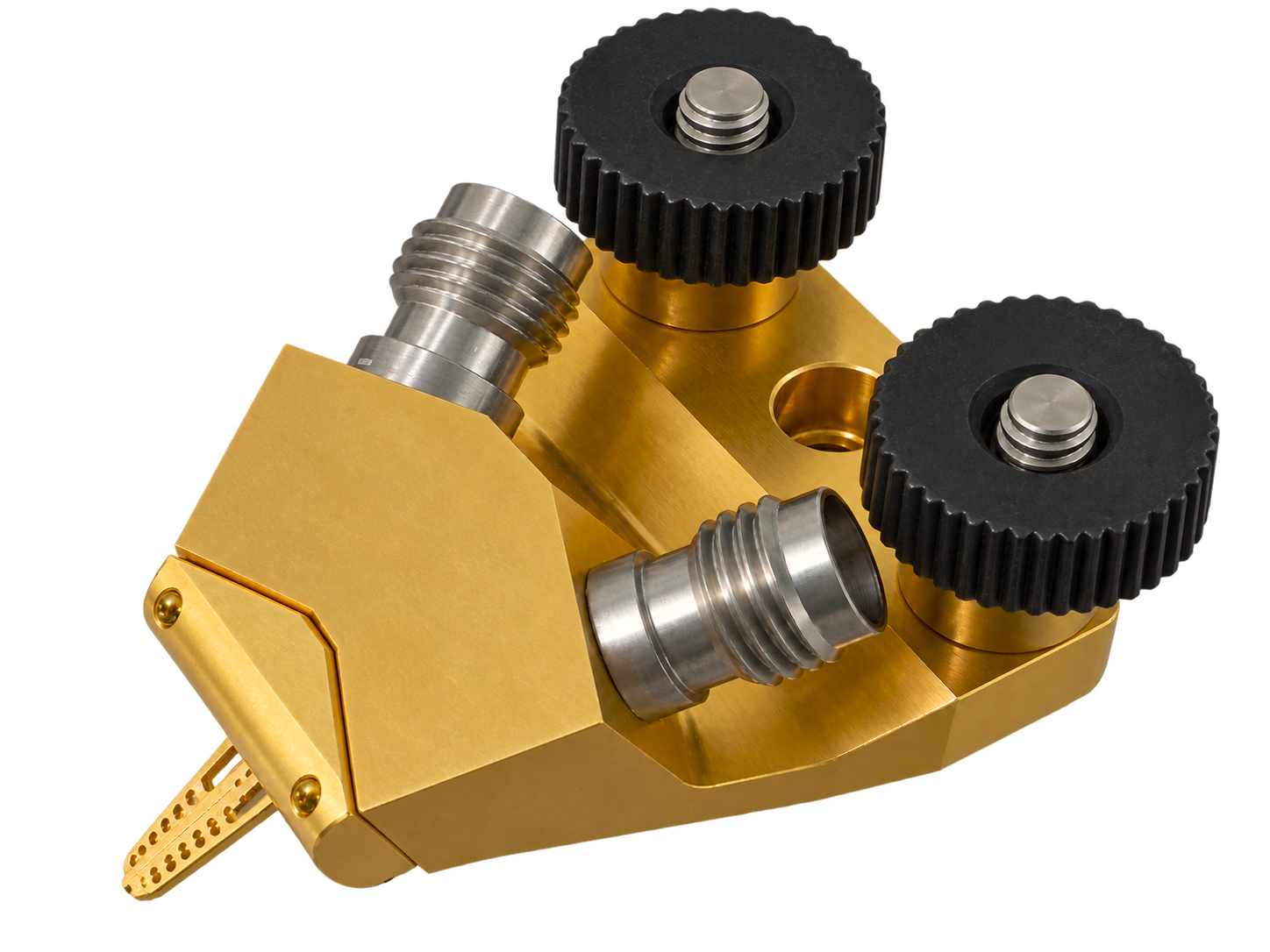
Differential Coaxial Probe
High-performance coaxial probe for millimeter-wave and terahertz measurements with low loss, high repeatability and wide bandwidth.
- Frequency RangeDC – 220 GHz
- Interface Type0.6mm, 0.8mm, 1.0MM coaxial connectors
Product Overview
Leveraging the deep R&D heritage of Xi'an Jiaotong University, our coaxial probes are designed for high-frequency measurements with precision manufacturing that ensures perfect matching between the probe and the coaxial interface. Ideal for on-wafer RF/microwave testing, optoelectronic device characterization, and high-speed interconnect signal integrity verification. Each probe is rigorously calibrated for outstanding repeatability and durability, with a range of standard options and customization services to meet diverse customer needs.
The GSSG probe is manufactured with a special MEMS semiconductor chip process, achieving differential crosstalk suppression of over 30 dB, a world-leading level.
Key Features
Ultra-wide Bandwidth
Covers DC to 220 GHz to meet ultra-broadband test needs.
Low Insertion Loss
Premium dielectric materials keep insertion loss below 5 dB.
High Repeatability
Contact design ensures consistent results across measurements, with repeatability better than 0.05 dB.
Durable Design
Stainless steel housing with replaceable probe tips for a long service life.
Unique Probe Tip Structure
Based on a 3D MEMS design, achieving -35 dB crosstalk.
Customization
Frequency ranges and interface configurations can be customized to customer requirements.
More Information
| Model | Frequency | Pitch | Typical Insertion Loss | Typical Return Loss | Crosstalk |
|---|---|---|---|---|---|
| DC-145-GSSG | DC-145 GHz | 100\125 µm | < 2.5 dB | < -15 dB | < -25 dB |
| DC-67-GSGSG-100 | DC-67 GHz | 100 µm | < 2.0 dB | < -15 dB | < -40 dB |
| DC-110-GSGSG-125 | DC-110 GHz | 125 µm | < 2.2 dB | < -15 dB | < -25 dB |
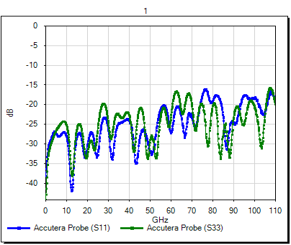
Click a model in the table or a button below to view the corresponding image
For more information, please download:
Datasheet
Detailed electrical specifications, mechanical dimensions and interface definitions.
Download PDF